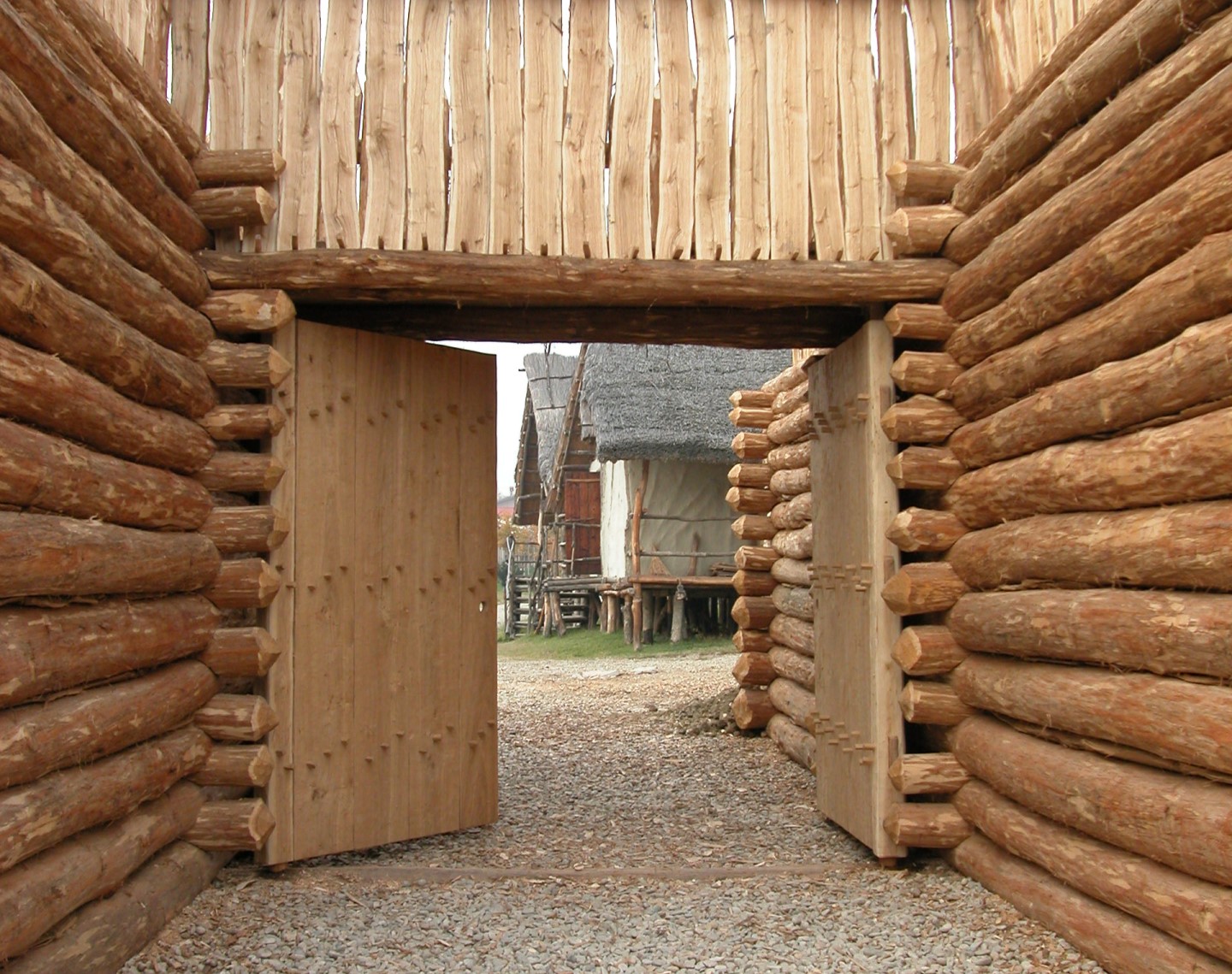
Fortification and village gate
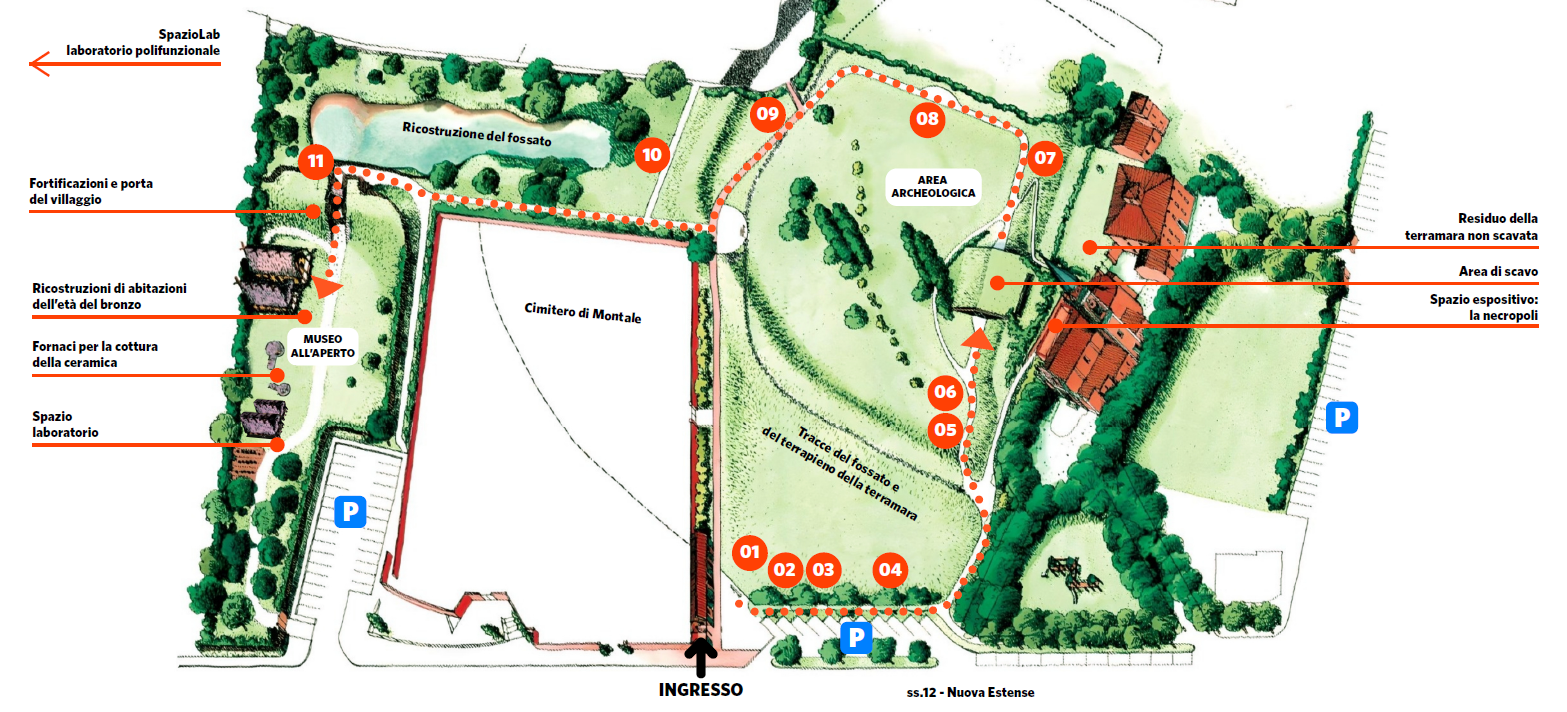
Within the village, a portion of the fortifications consisting of the moat and the rampart has been reconstructed.
The two structures give an idea of the mighty artificial defences that surrounded Montale's terramara.
The moat, which is smaller than the original (approx. 20 metres instead of 35), not only acted as a barrier for enemies, but also represented a valuable water reserve. The rampart is equipped with a palisade to increase the protection of the village and its defenders in case of attack.
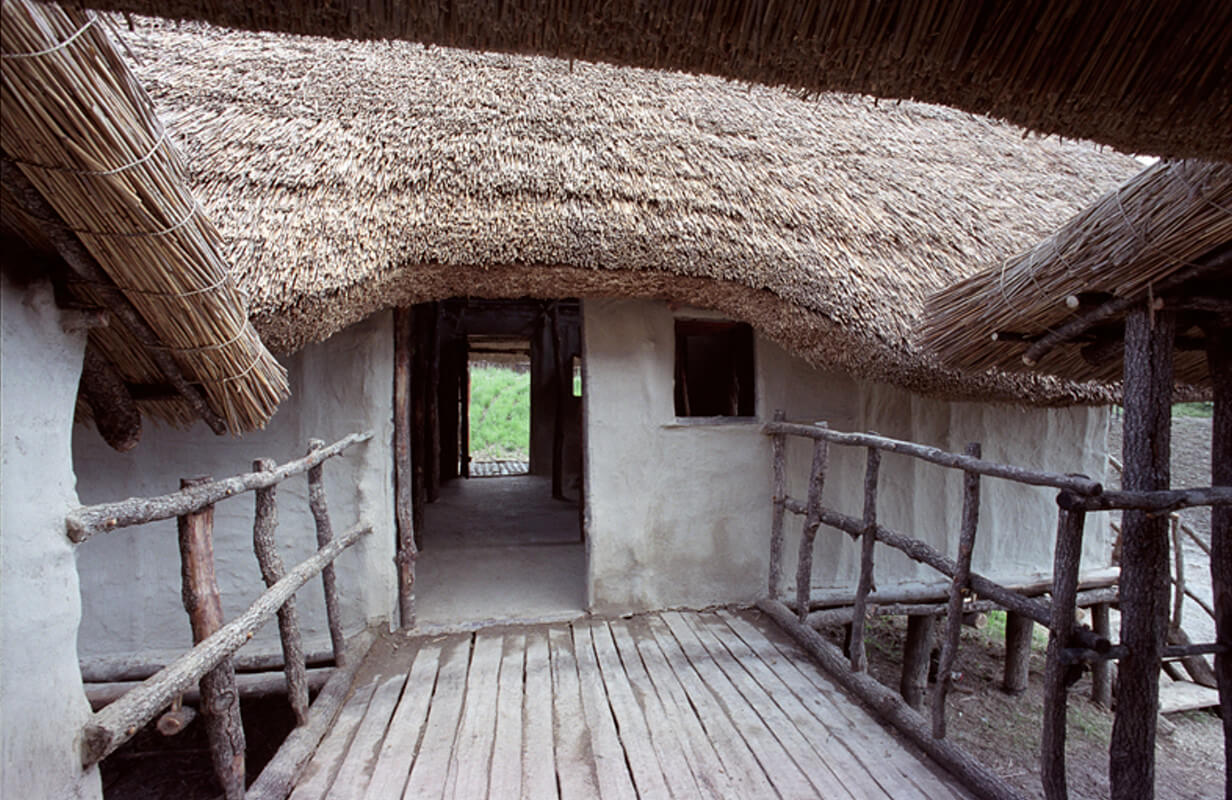
The gate is set back and flanked by two outposts. This position is attested in some Italian and European Bronze Age settlements and had a defensive function.
Reconstructions of Bronze Age dwellings
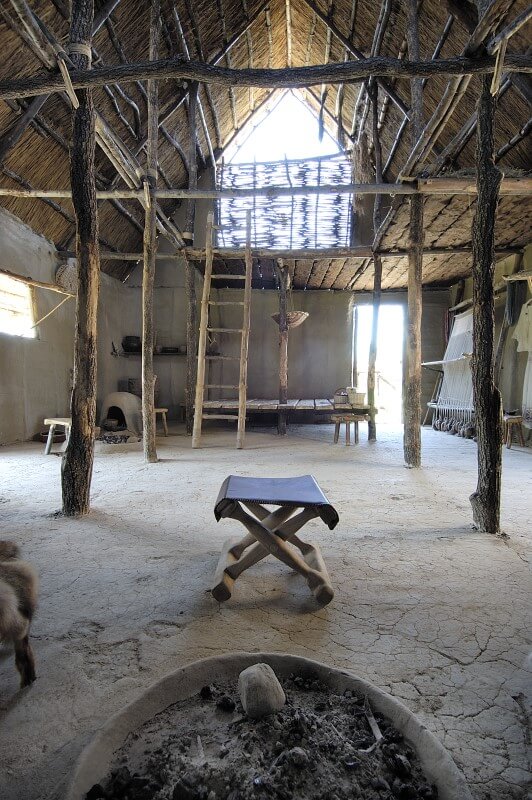
Beyond the gate, two houses are visible. Of course, in reality, the village contained a larger number of houses. For Montale, we can assume that the number was between thirty and forty dwellings, with a number of inhabitants close to one hundred and fifty. The houses were flanked and separated by very narrow streets. Larger streets were to be the main ”arteries” of the village. There were also open spaces for animal shelters, storage or meeting areas.
The shape of the two dwellings was deduced from the evidence found in the excavation, in particular by using the plans of the dwellings from the two oldest phases of the village (Phase I and Phase II), which were more complete.
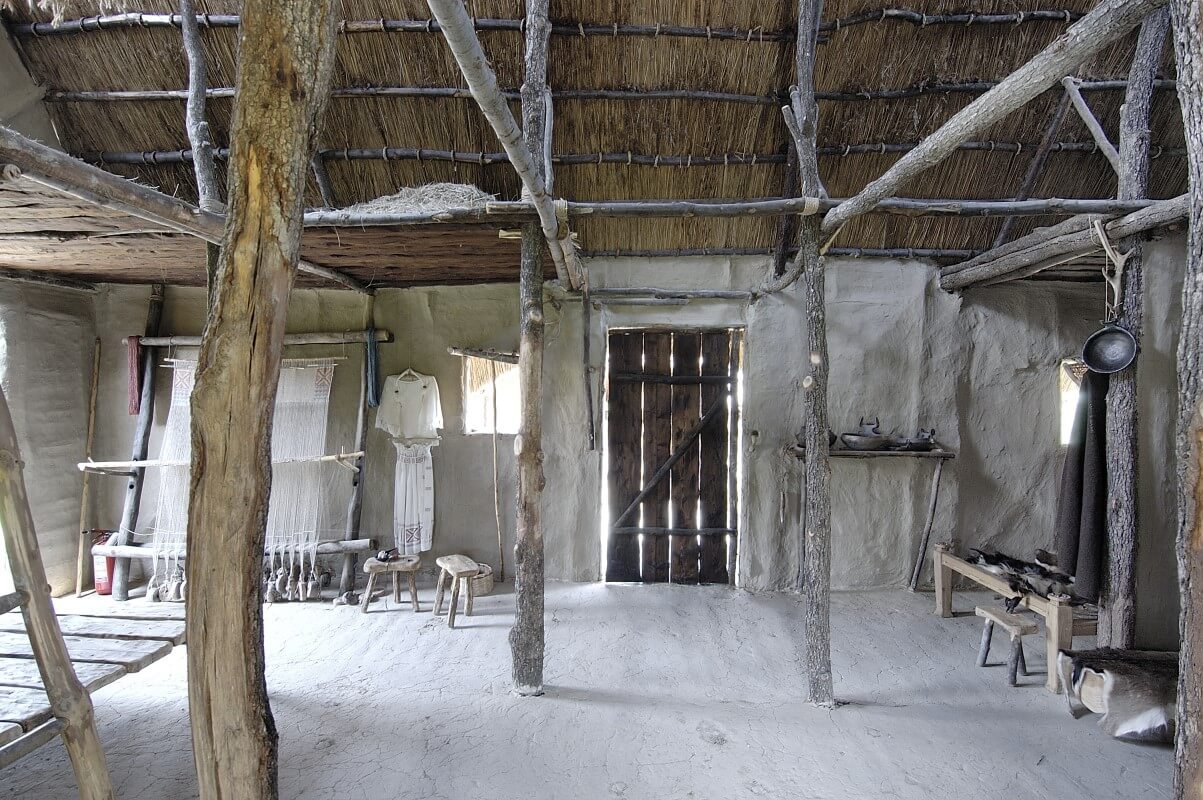
In both cases, these are structures raised above the ground, divided internally into aisles consisting of rows of supporting posts flanked by an equal number of lower posts used to support the wooden floorboard. The roof is double-sloping, made of bundles of marsh reeds fixed to the wooden roof frame. The walls were made with a mixture of silt, sand and horse dung laid on a framework of branches or swamp reeds.
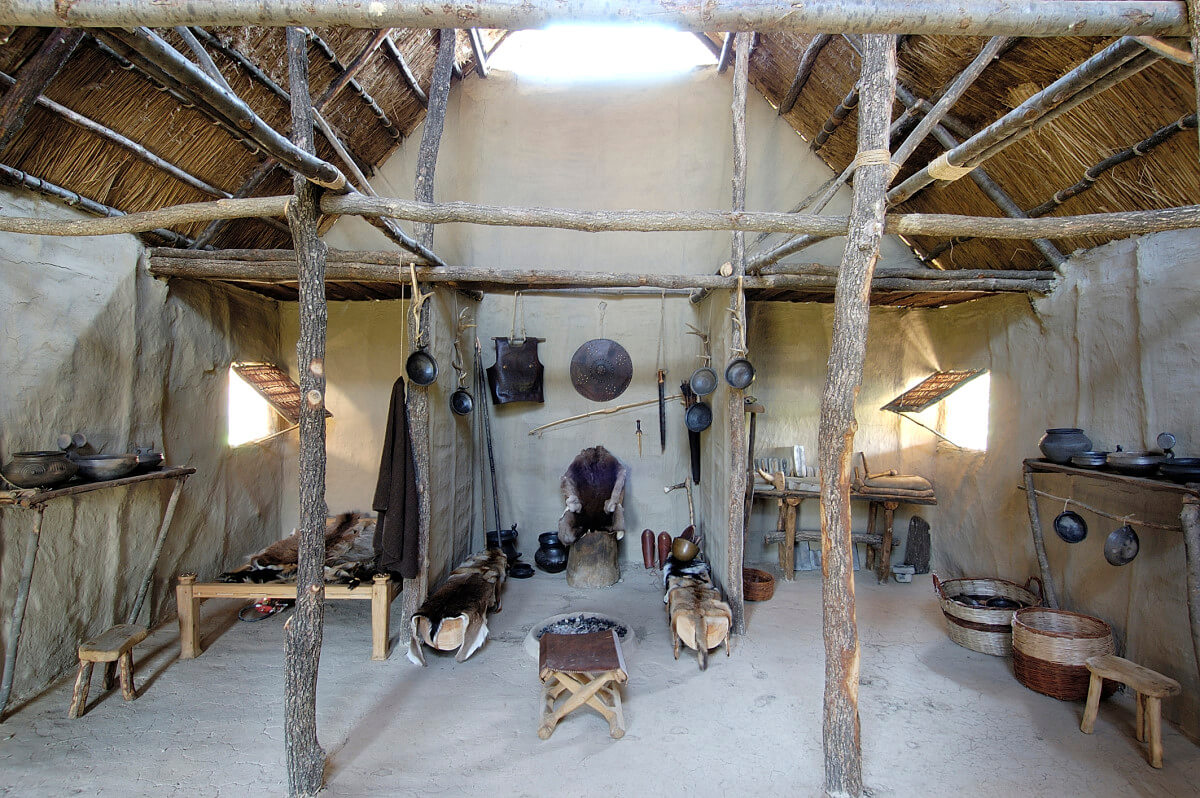
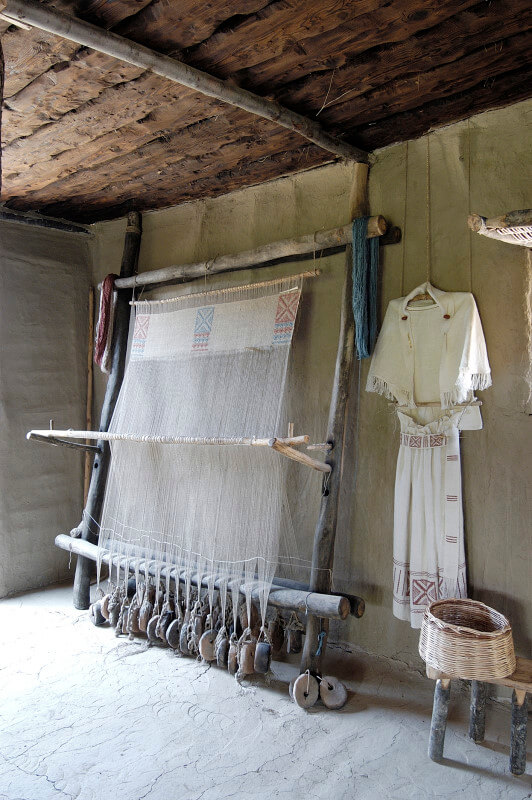
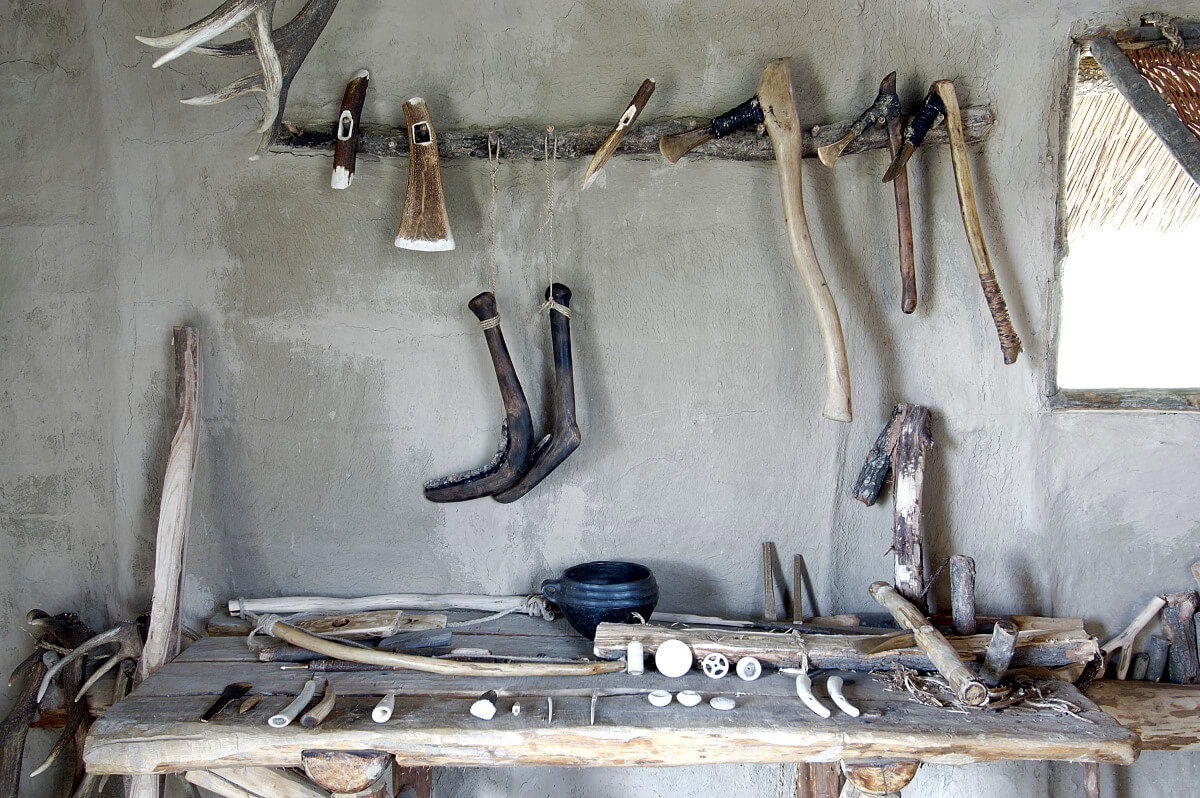
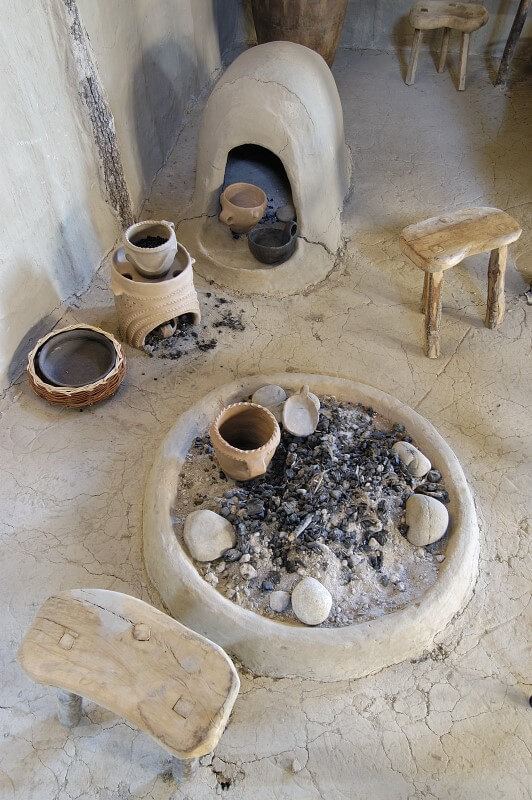
The furniture and objects found in the two dwellings have been faithfully reproduced on the basis of originals found in the Montale excavations or from examples from other terramare and archaeological contexts of the same period. The layout was characterised by references to domestic and craft activities (metallurgy, weaving, ceramics, deer horn work) and customised around social figures (warrior, craftsman, female figures of rank).
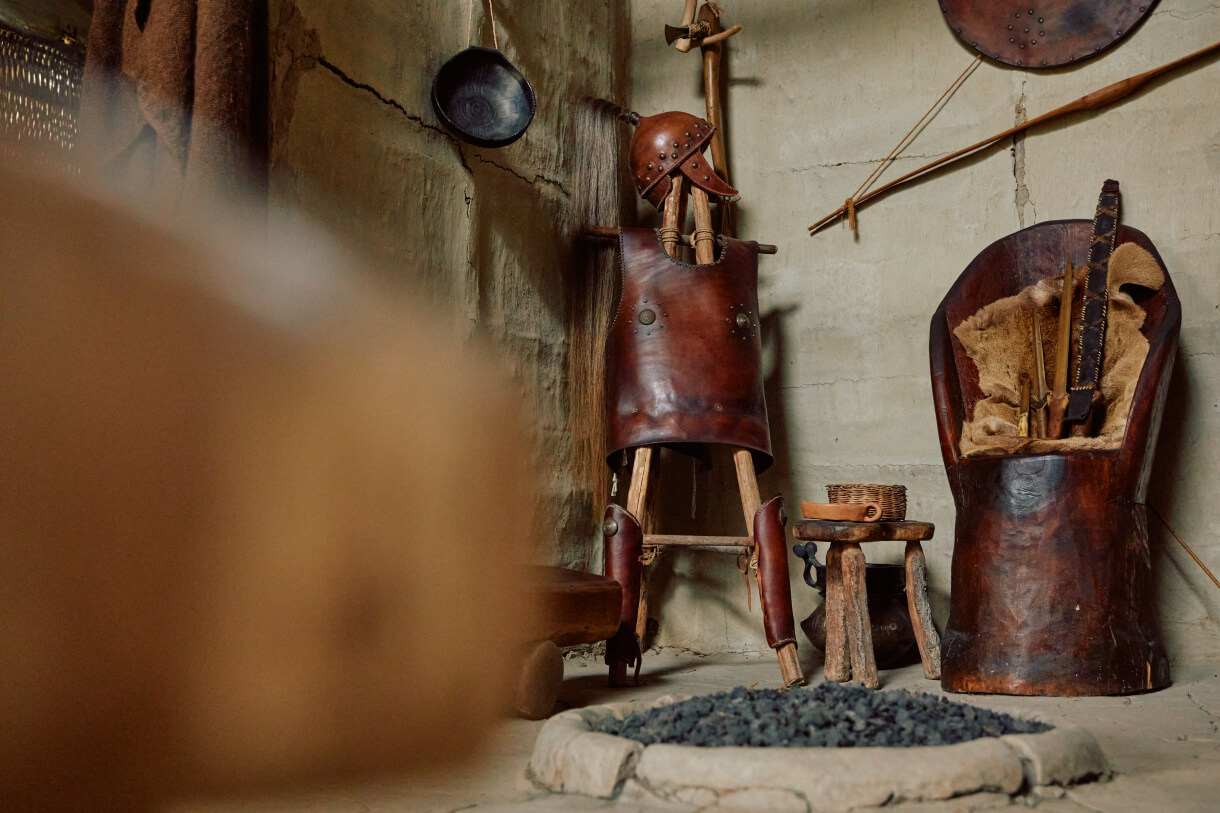
What noise does a terramara make?
Inside the two reconstructed houses in the open-air museum, audio installations were designed to bring to life the sounds and noises of the activities that took place inside the houses and in the surrounding environment
The crackling of the fire, the pot boiling, the sound of the chassis in operation...
Then something exceptional happens: the warriors of the village gather to discuss an imminent threat. Their buzz is accompanied by the sound of metalworkers sharpening bronze weapons. A libation of wine concludes the meeting: it is time for battle.
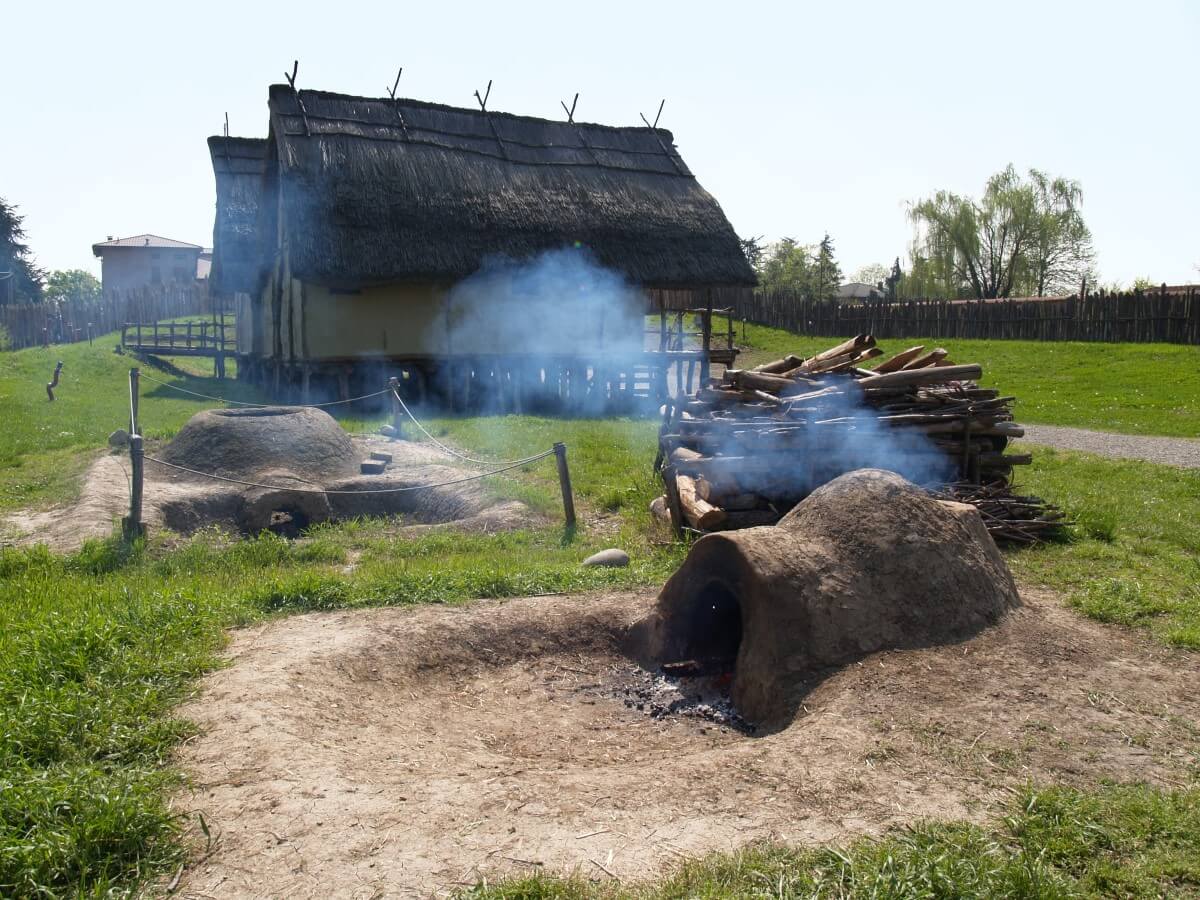
The furnaces
Two pottery kilns were built in the vicinity of the dwellings, used for the production of medium and large pottery.
Both kilns consist of a circular dome-shaped chamber made of clayey earth mixed with vegetable fibres, a frontal opening and a chimney behind to favour and control the flow of air.
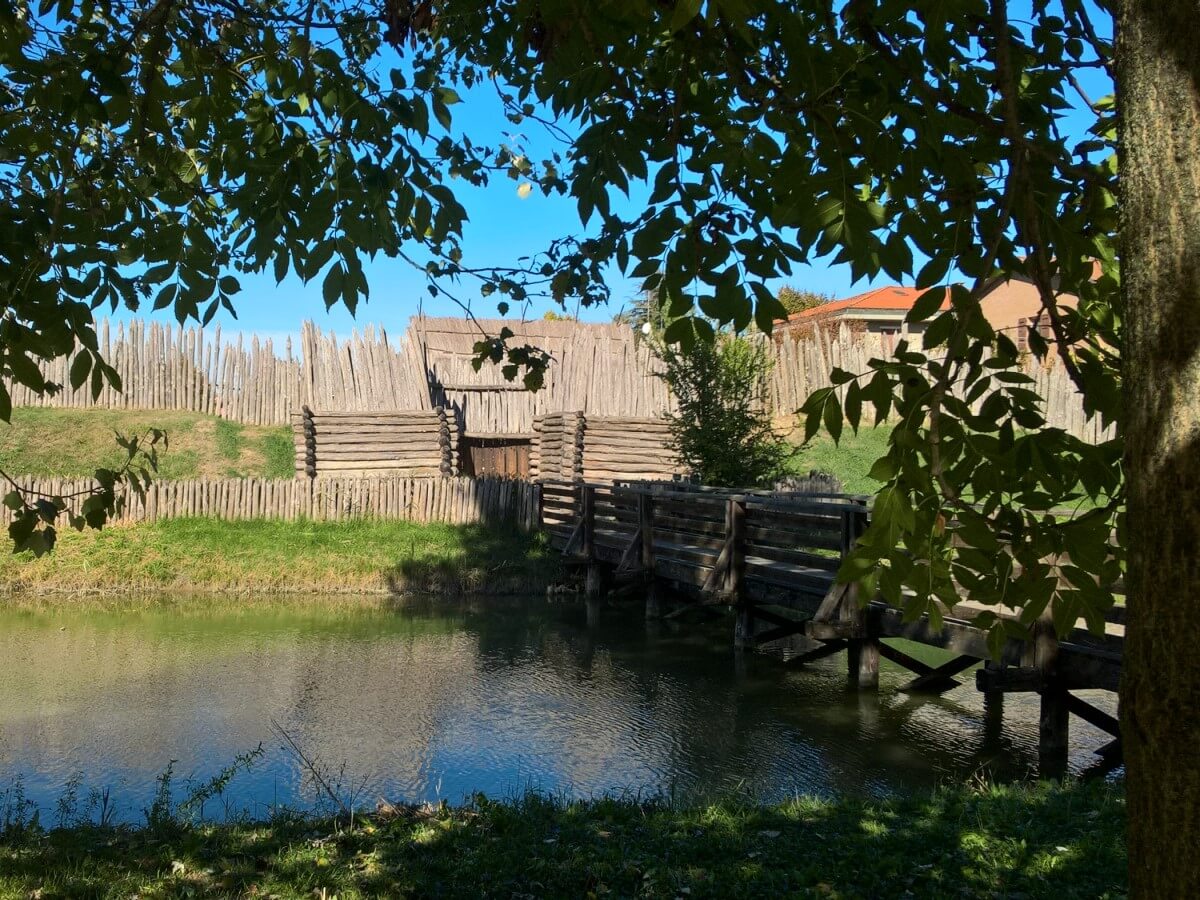
The environment in terramare times
In the area hosting the reconstructions, great attention was paid to the natural environment. Existing exotic species have been gradually eliminated and replaced with species identified in the archaeobotanical analyses or otherwise compatible with the natural environment of the Po Valley at the time, such as oak, hornbeam, elm, maple, dogwood, blackthorn, walnut, ash, yew, willow and vine.
Along the banks of the moat are plants typical of the lowland wetland environment, marsh reed, bulrush, sedge, cattail and water lily.