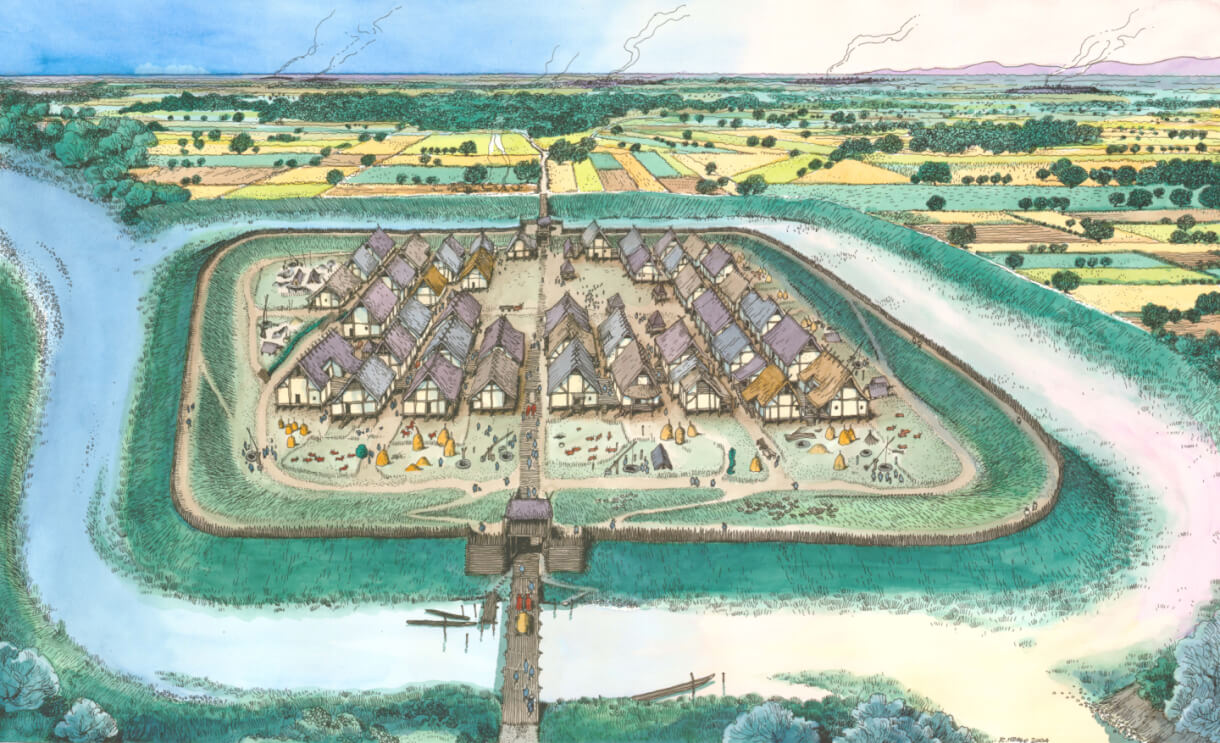
The terramares are villages dating between the Middle and Recent Bronze Age (1650 - 1170 BC)surrounded by an embankment and a moat.
The houses, neatly arranged, were often built on raised platforms supported by poles. The size of these villages ranged from 1-2 hectares in the earliest phases up to 20 hectares in the most advanced phases (1 hectare = 10,000 sqm).
They are known about 200 in the area comprising the central Emilian plain and the lowland areas of the provinces of Cremona, Mantua and Verona. The total number of inhabitants, very high for that time, could be between 150,000 and 200,000.
Society was organised according to a 'participatory' model involving the whole community, but economic and social diherences were attested.
In later phases, the dierences between villages increased and more important centres began to form alongside others that probably functioned as smaller centres.
Warriors and their women represented the elite, however, the role of specialised metalworkers who made bronze weapons, ornaments and tools.
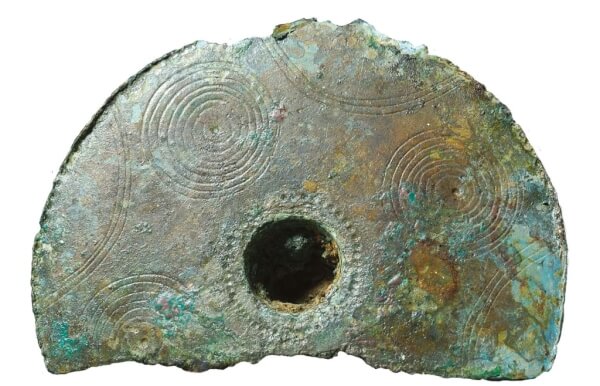
Bronze pin head found during excavations that inspired the Park's logo.