BEFORE THE TERRAMARA
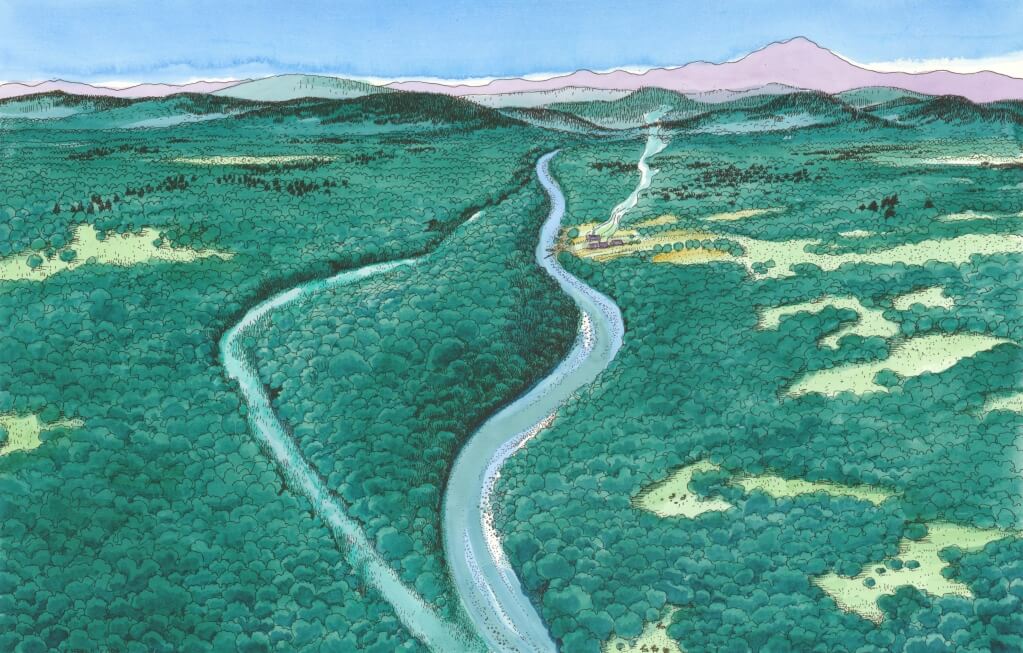
On the site where the terramara would have stood, an accumulation of sand and silt deposited over the centuries by an ancient watercourse had formed a relief approximately four metres high, bordered by a stream.
The surrounding landscape was characterised by small clearings and dense woodland, mainly consisting of oaks, but also rich in conifers, more frequent towards the hills.
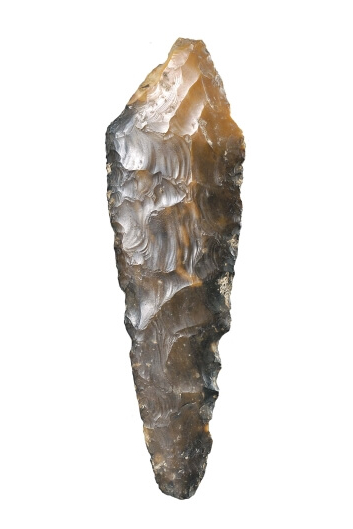
Human presence in the territory was limited to a few small villages. Traces of frequentation prior to the terramara are evidenced by a flint daggerpossibly attributable to the Copper Age.
IN THE DAYS OF THE TERRAMARA
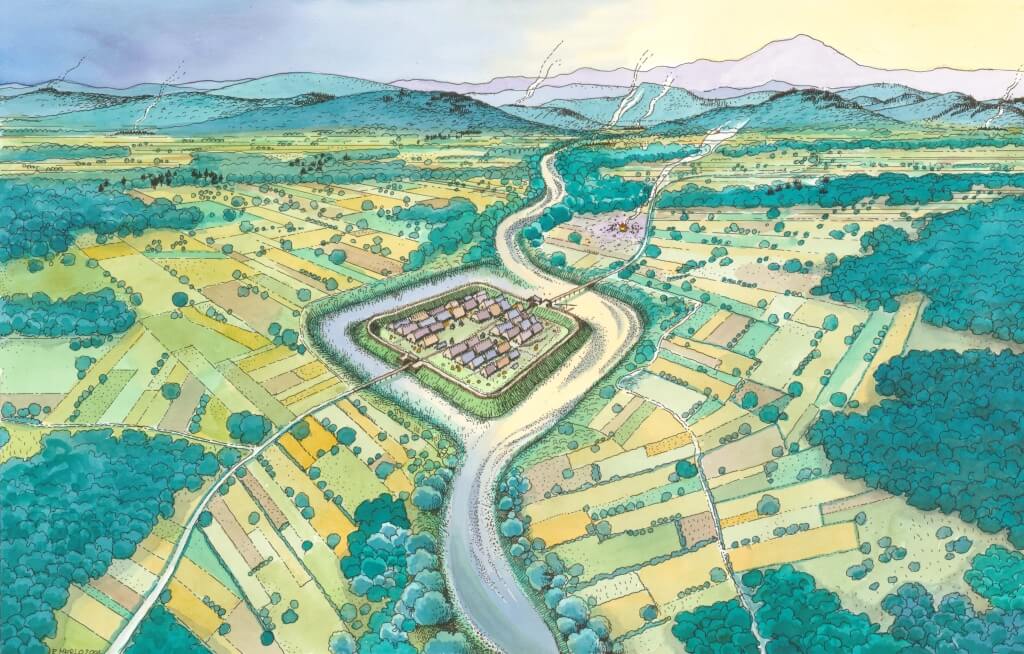
Around the 1600 BC., a Bronze Age community settled on the natural relief and began work on the area. The nearby watercourse is channelled into a wide moat.
A embankmentprobably complemented by a palisade, also provided additional protection from the risk of flooding.
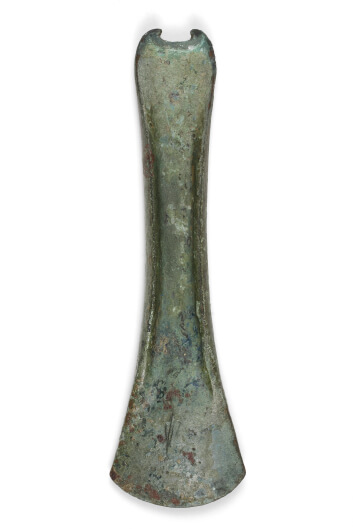
The interior space is occupied, with the exception of a few open areas, by homes rectangular plan of approximately 60 square metres, separated by roads. Bronze axe.
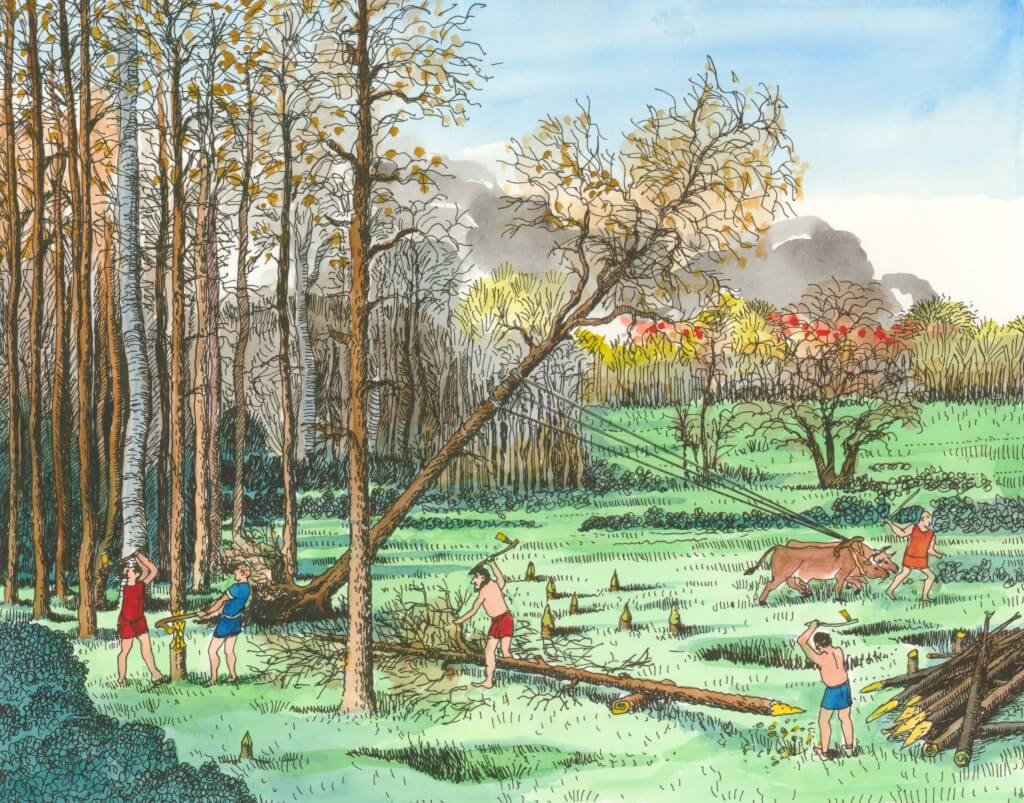
The huge amount of wood needed for the construction of the houses and the village defences had been obtained by deforesting the surrounding environment. The wide open spaces obtained in this way had allowed for the development of an intense agriculture and animal husbandrythe basis of the land-based economy.
AFTER THE TERRAMARA
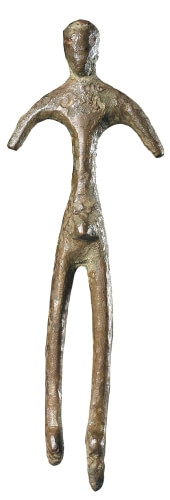
After the abandonment of the terramara, the site and the surrounding area show no traces of frequentation until theEtruscan period. In fact, some vases and a bronze statuette from the upper layers of the mound.