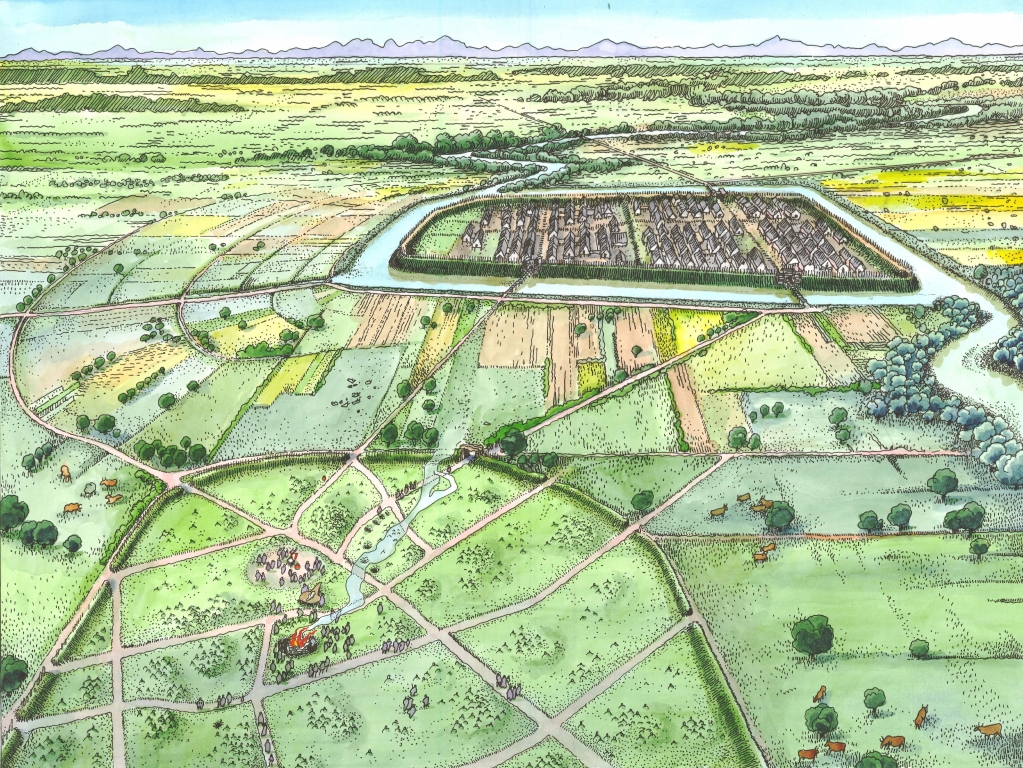
I burial grounds of the terramare were located in the vicinity of the settlement, generally upstream of the villages. While hundreds of villages are known, only a small number of necropolises are known, probably because they are less recognisable than the settlements, but also because many were destroyed by land use in later centuries. The necropolis of Montale is not known to us, perhaps because it may have coincided with the current settlement, however, only 5 km from Montale the Civic Museum of Modena excavated, between 1994 and 2015, the vast necropolis of Casinalbo, located 200 m from a terramara. Since the sites of Montale and Casinalbo are coeval, we can assume that the funerary rituals were similar, as also confirmed by other Emilian terramaric necropolises.
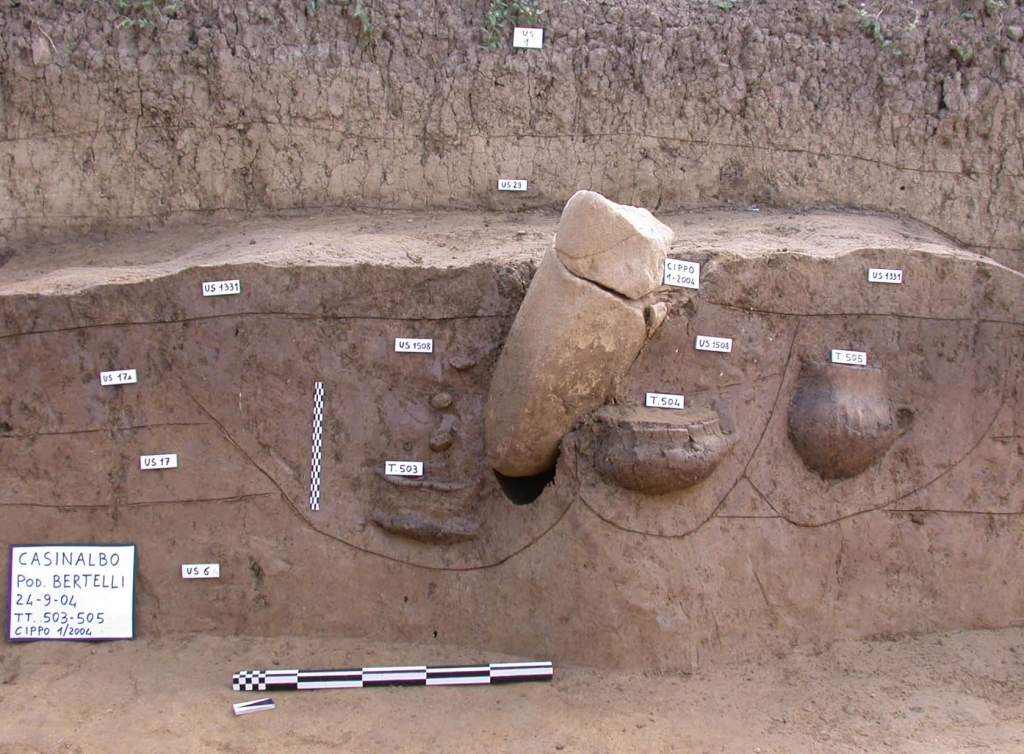
The ritual Cremation was adopted, unlike the terramares north of the Po, which may have had inhumation burials in their earliest phases.
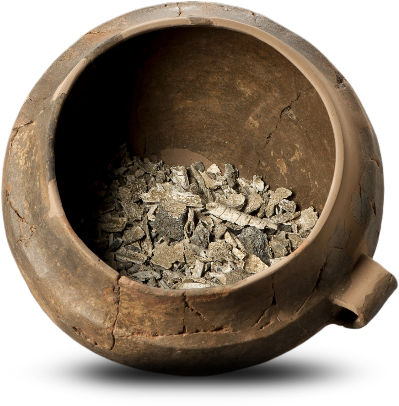
The burnt bones of the deceased were kept in cinerary urns placed inside pits and often marked by large river pebbles.
They were rarely present accompanying elementsornaments and objects of daily use made of bronze, bone or horn that often show traces of exposure to fire, showing that they were placed on the pyre with the deceased.

After 100 years the Museo Civico di Modena in agreement with the Soprintendenza per Beni Archeologici dell'Emilia Romagna has resumed research that has uncovered traces of the village fortifications, one of the few intact archaeological deposits attributable to a terramara.
The results of these excavations have not only made it possible to plan the reconstruction of part of the village, but have significantly enriched our knowledge of the structures, productions and chronology of the terramare.