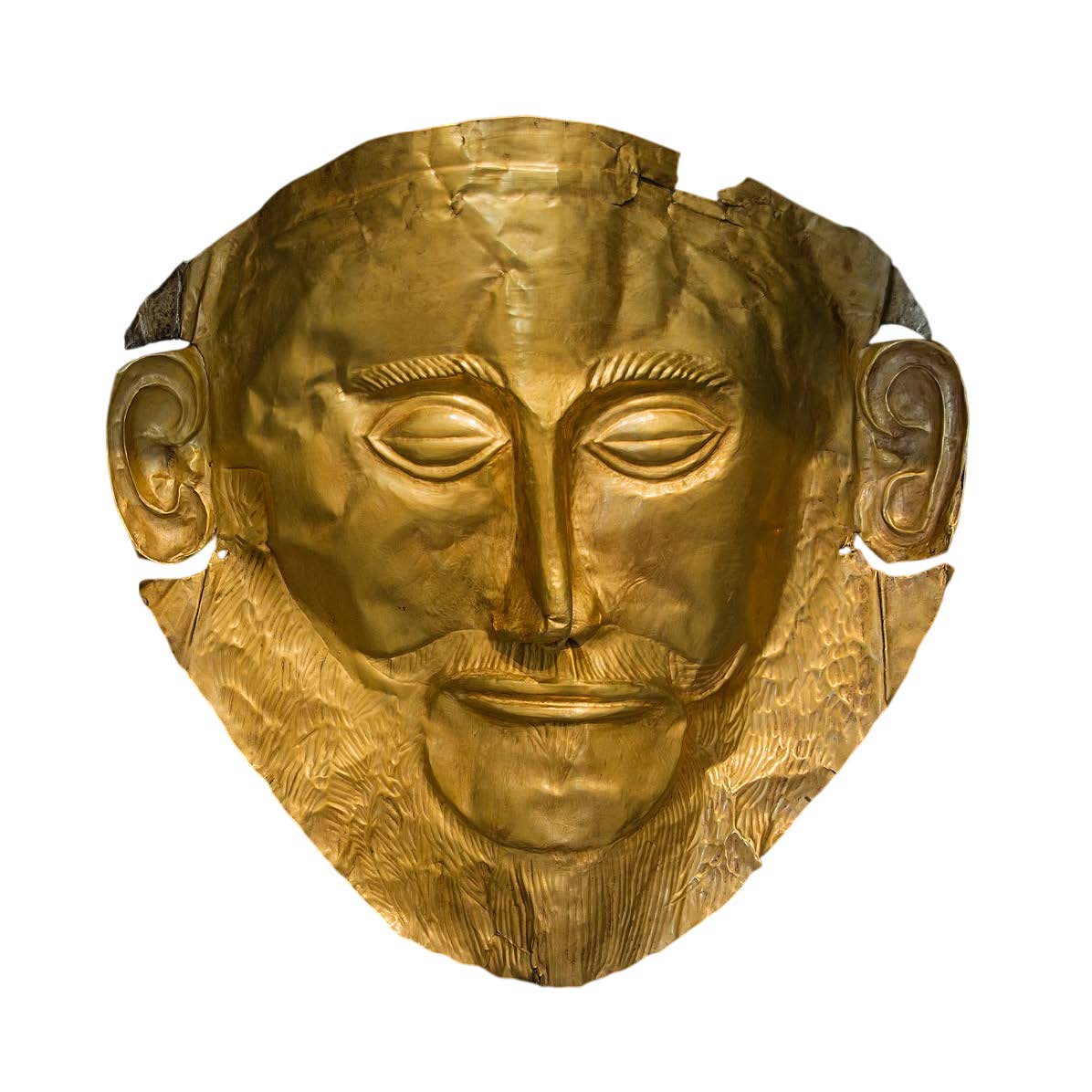
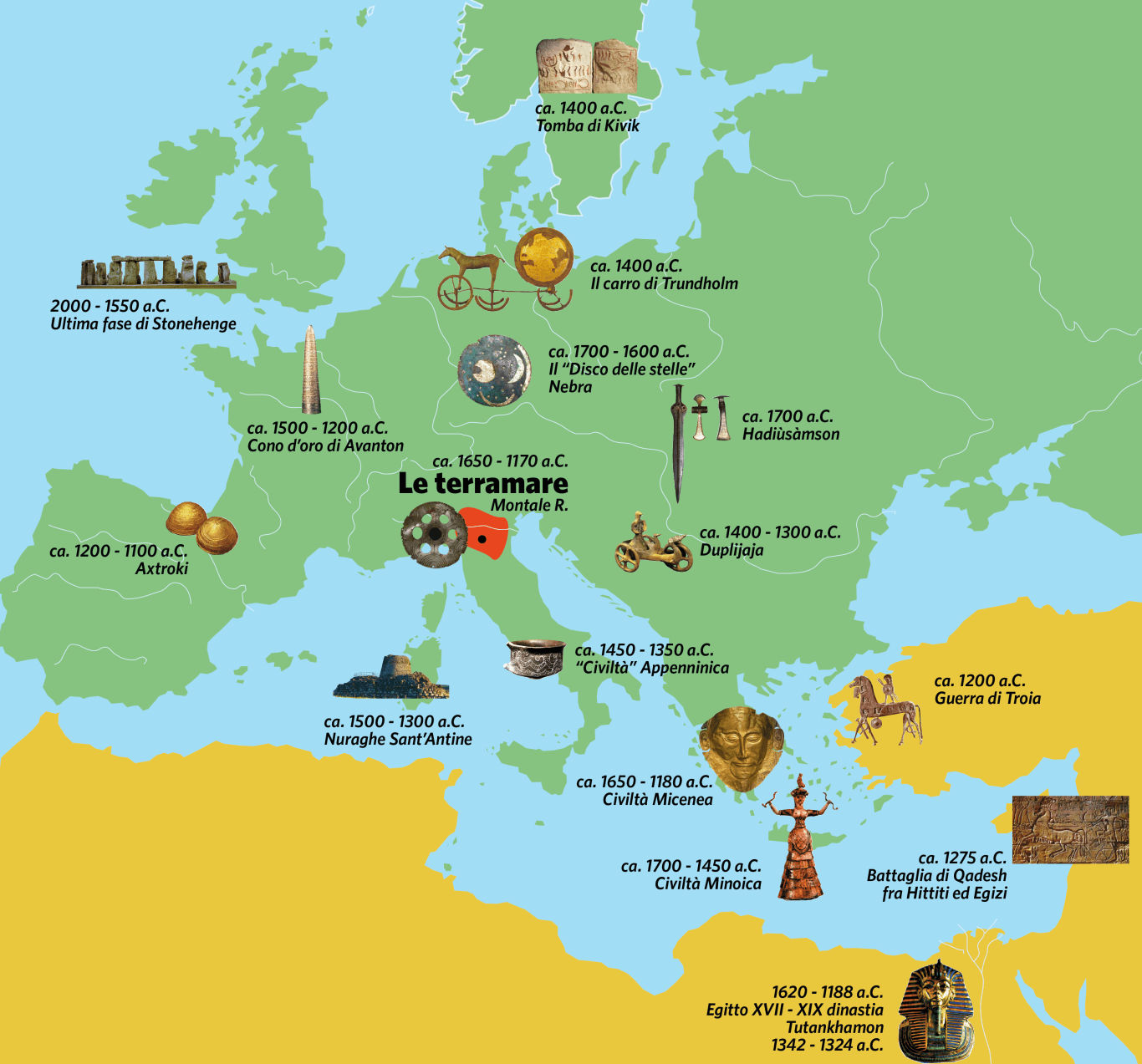
Trades and exchanges of goods, even over long distances, were very frequent for the supply of the copper and especially of the tinneeded to make bronze objects, but many other goods, such as ambercirculated in Europe through a dense network of relationships that even reached theMycenaean areafrom which sailors and artisans assiduously frequented the coasts of the Italian peninsula.
Of this world, terramares represent one of the most significant aspects. The characteristics of the villages, the solid economic and territorial organisation, the social structure of the communities, participatory but not egalitarian, and the grandiose handicraft production make the terramare society one of the most advanced of its time.
Their location between the Mediterranean and Central Europethe same period that saw the development and crisis of the Mycenaean world, makes terramares one of the most significant archaeological aspects for understanding the history of the European continent in the second millennium B.C.