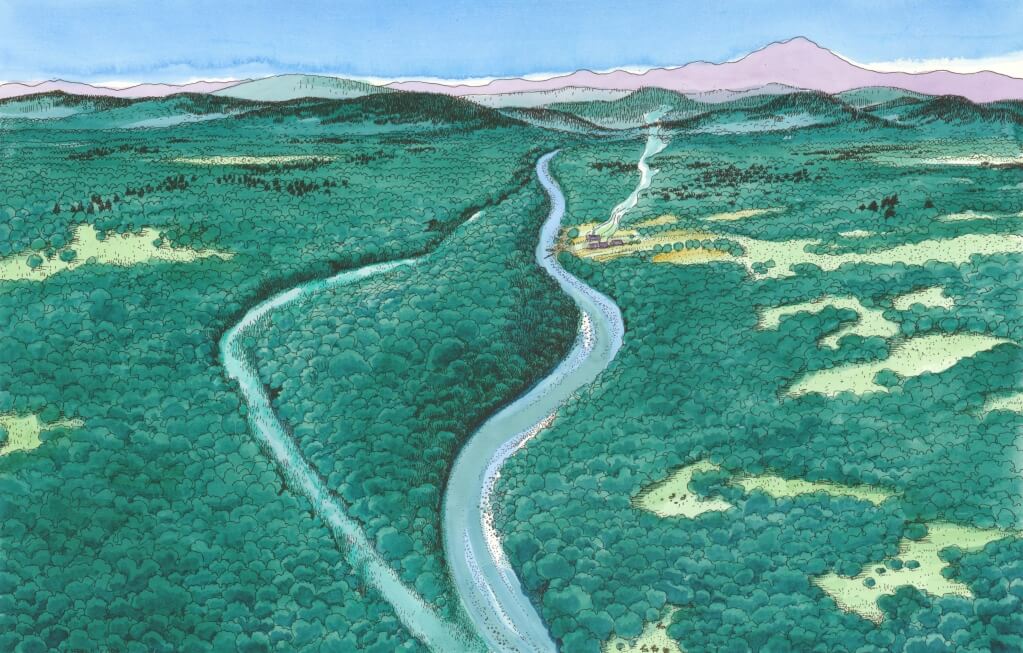
Analyses of pollen, of seeds/fruits e woods/coals from the 1996 - 2002 excavations provided numerous data on the environment in which the Montale terramara was located.
Pollen remains indicate for the period before the foundation of the village aextensive forest cover consisting of oaks, hornbeams, elms, alders and willows. Cooler climate trees such as beech, conifers or birches could be found at higher altitudes in the Apennines.
The foundation of the terramara led to the felling of many trees in order to obtain fields for cultivation and pasture and to provide for the construction of the village.
Similar evidence found in many other terramares makes it possible to state that at this time there was the first major modification of the natural landscape of the Po Valley by man.
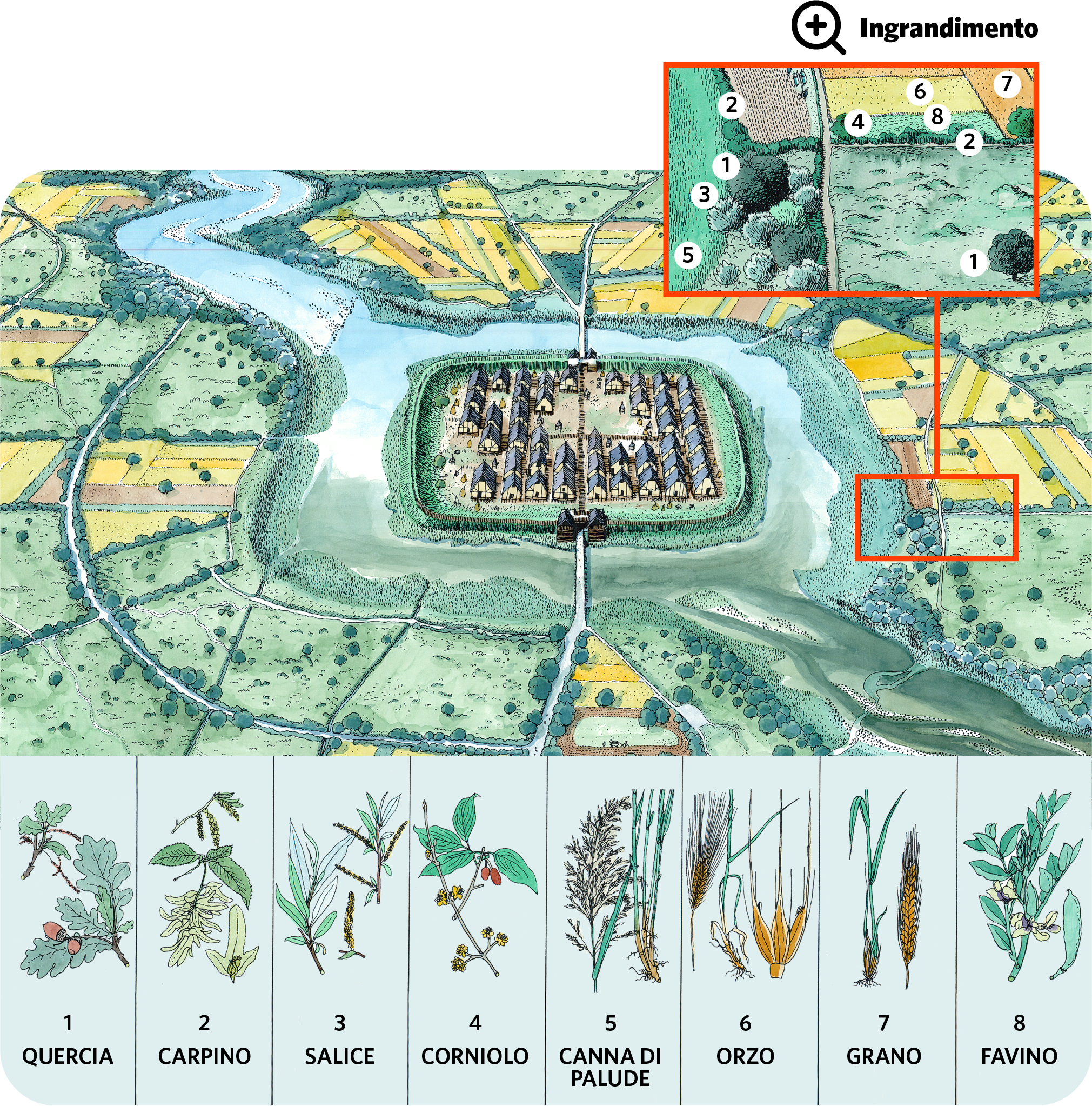
The land around the terramara was intensively cultivated, especially in cerealsparticularly wheat and barley, and to a lesser extent millet, bread and oats. Among the pulses broad beans and lentils are present.
There is also evidence of the cultivation of hempused to make mainly cordage, cloth and perhaps fabrics. The latter, however, must have been mainly made of wool or linoplant of which no seeds or pollen have been found in Montale, but known in other terramare and Bronze Age sites.
Analyses of the wood and charcoal remains showed that the terramare inhabitants had a good knowledge of the properties of wood. The oakparticularly resistant, was mainly used for the construction of houses and for sturdy agricultural implements, while for arches and other artefacts, a tough, easy-to-work wood such as the maple tree.
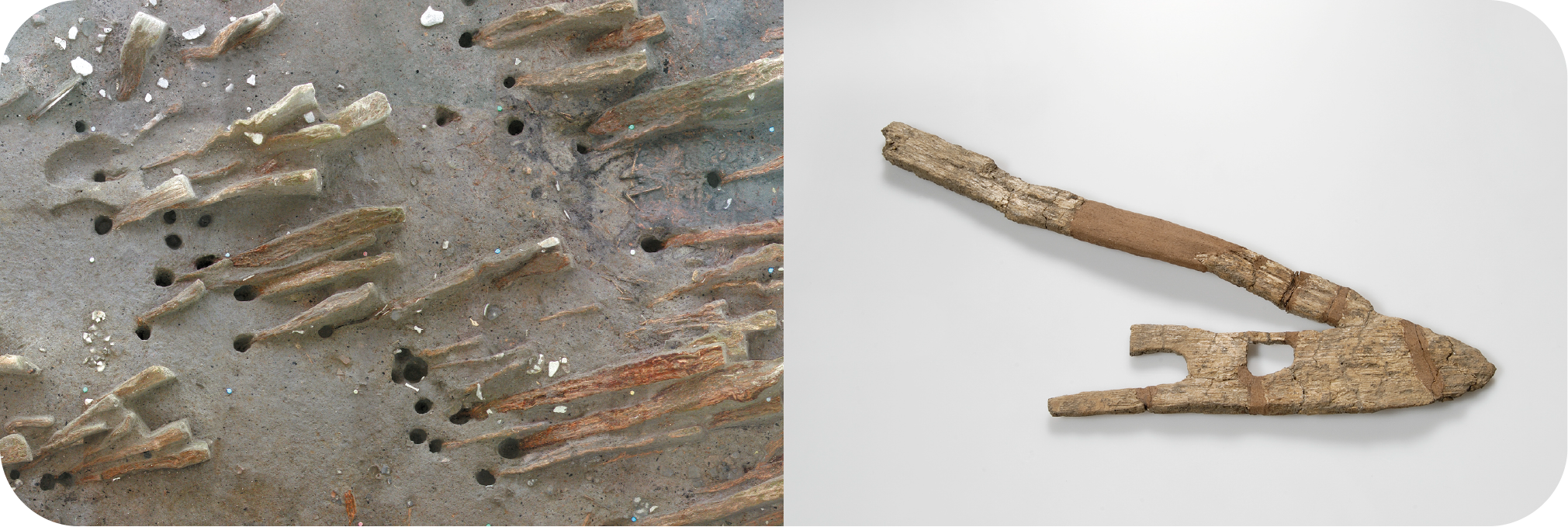
The piles of a house being excavated.
Small plough made of oak wood.