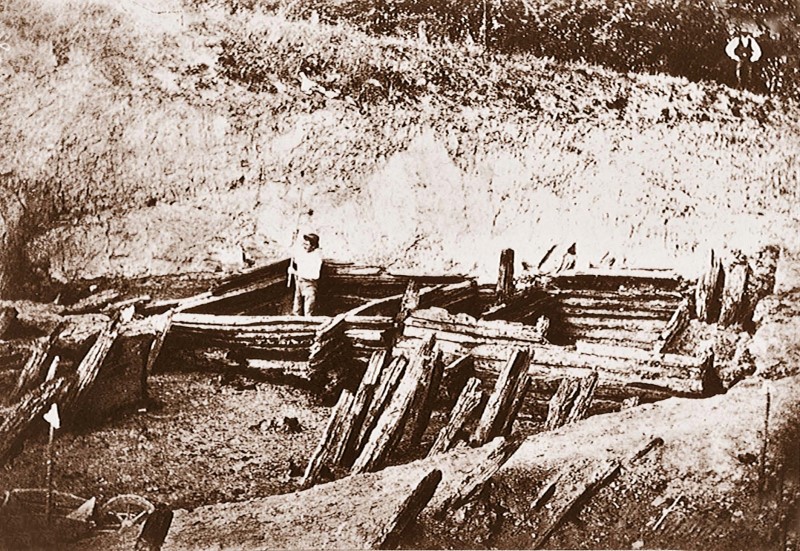
The terramares were surrounded by imposing and complex defensive workshighlighted by archaeological excavations. Fortifications could have consisted of "wooden 'gabions filled with the spoil from the excavation of the moat, as in the terramara of Castione dei Marchesi, near Parma.
More often, the perimeter defence consisted of a land filling surmounted by a palisade of wood, as is also attested in Montale, where excavations in the 19th century brought to light an embankment at least 10 metres wide and about 3-4 metres high, to which the height of the palisade was added.
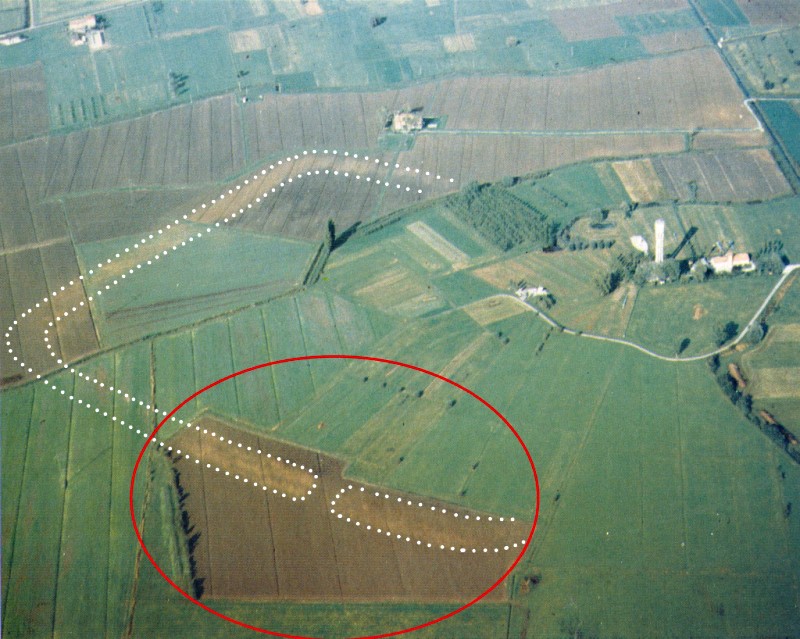
Aerial photo of the Terramara of La Braglia (RE). The break in the embankment corresponds to the entrance to the village.
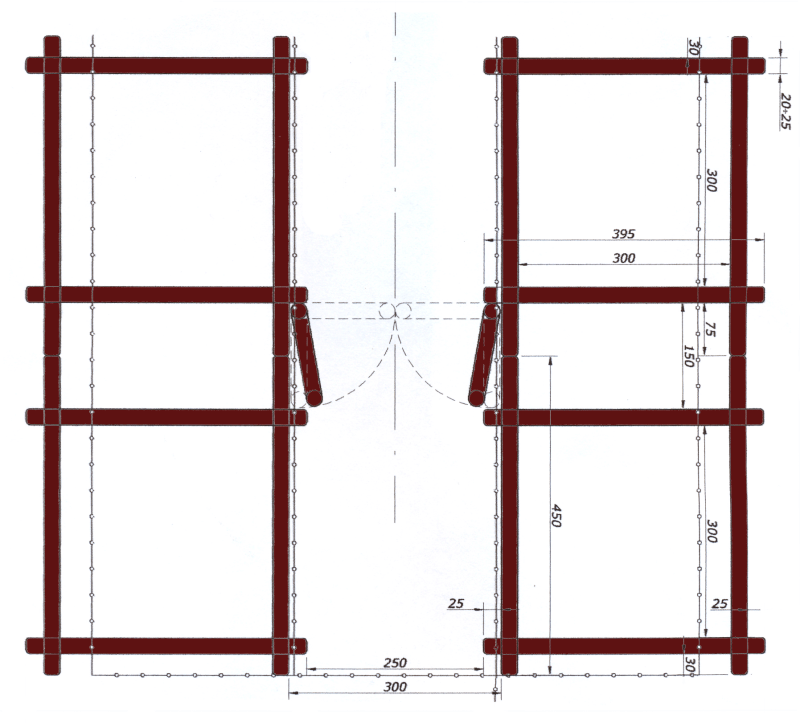
We do not know whether the Montale embankment was built after the collapse of a pre-existing 'gabion' wall, of which no trace has been found in the excavations. It is however likely that some wooden buttresses were used at least at the entrance gates to the village with the dual function of containing the embankment and reinforcing the defensive structure.
The gates to the terramares were presumably equipped with watchtowers and defence towers from where archers could contain enemy attacks, as attested by contemporary examples of stone architecture peninsular Italy and central Europe.
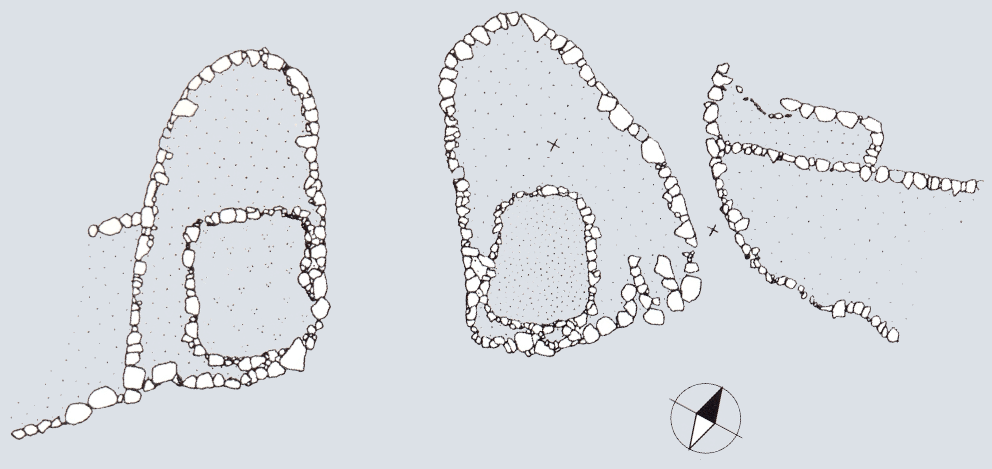
Coppa Nevigata (Apulia). Stone fortifications with towers at the entrance to the village.
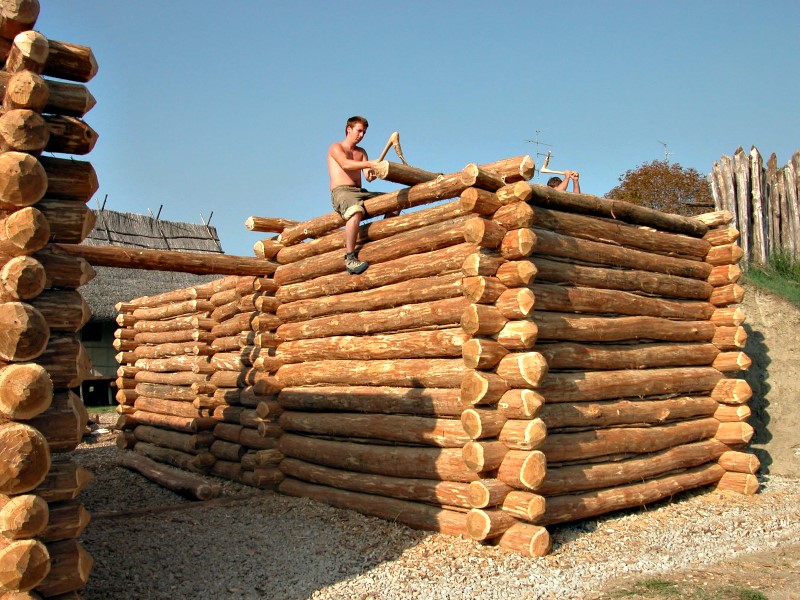
Construction of the access door to the Montale open-air museum built by VIAS (Vienna Institute for Archaelogical Science).
The reconstruction project for access to the Terramara di Montale open-air museum envisages a structure composed of two pairs of 'gabions' acting as defence turrets that contain the embankment on both sides, leaving a central passageway.