Beyond the village

PREVIOUS PANEL

Beyond the threshold, one enters a space that evokes a necropolis path and witnesses a ceremony whose protagonists are the deceased, in this case a warrior, and the community that through a series of rituals adorns him to the otherworld. The slow gestures of shadows filmed behind a veil narrate a liturgy that recalls a famous funeral of antiquity surprisingly similar to those of the terramares: the funeral of Patroclus narrated by Homer.

The procession accompanying the warrior's last journey crosses the necropolis. Leading it is the ociant of the rite who raises a gold foil disc with the sun symbol towards the sky. The warrior is placed on a platform and prepared for the journey into the afterlife, then, together with his sword, he is laid on the funeral pyre.

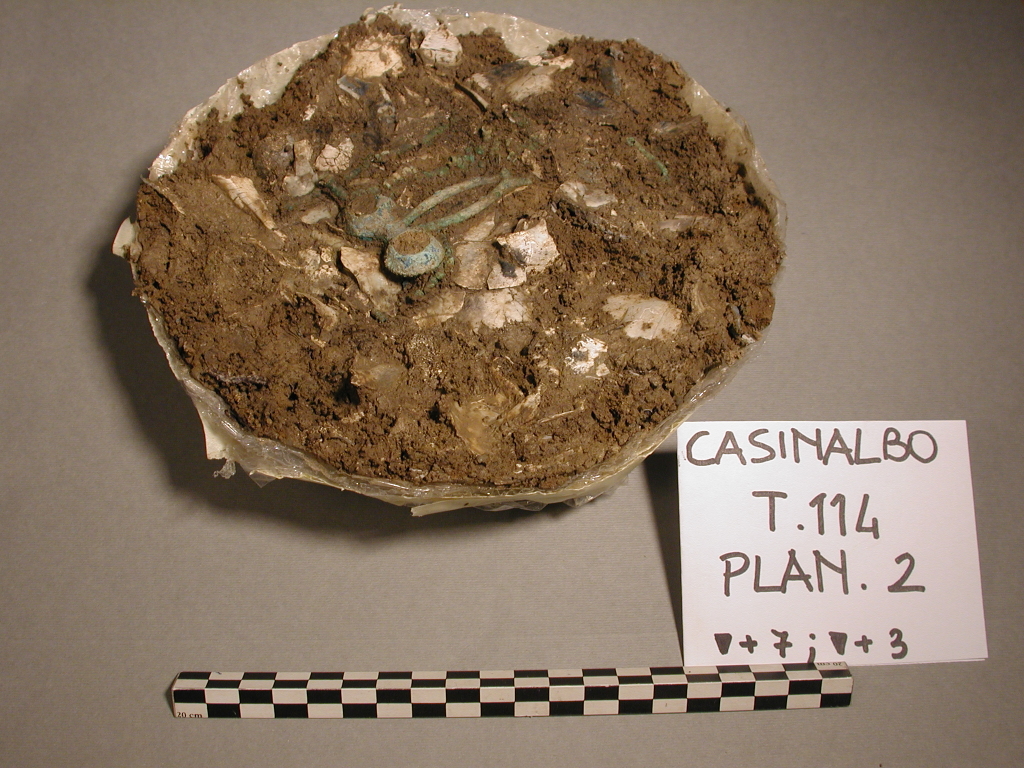
After burning, small fragments of bone remain: they are carefully chosen, washed and placed in the cinerary urn. Usually the remains of the lower limbs were deposited at the bottom, and those of the skull near the mouth of the vessel.

A final ceremony is reserved for the warrior: the sword is broken and the fragments laid on the ground. The funeral banquet and libations, probably based on wine, conclude the ritual.

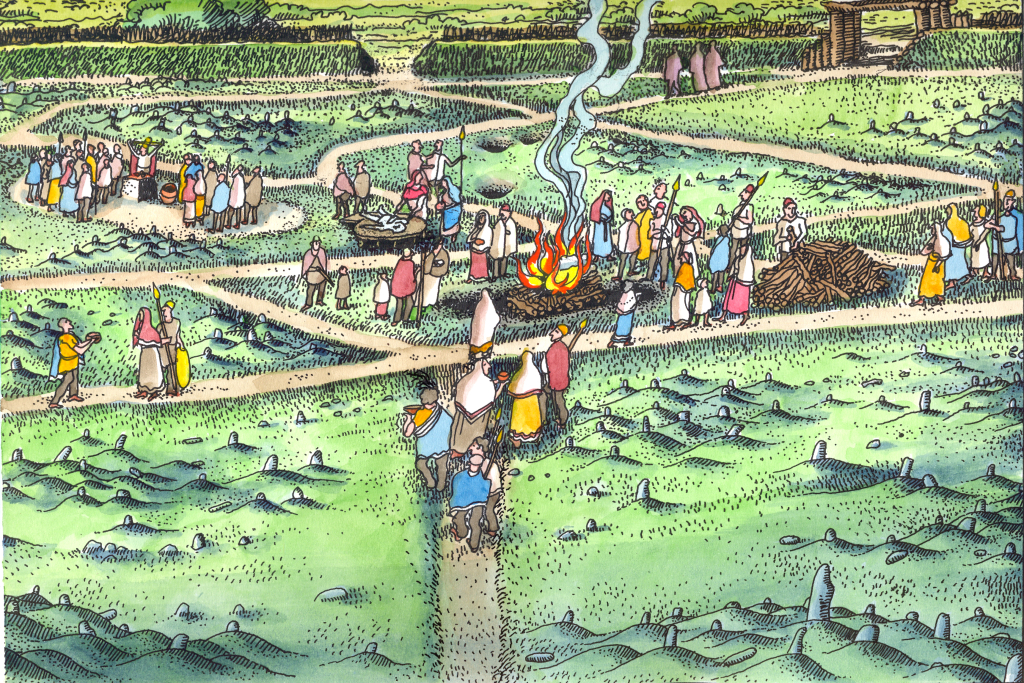
The reconstruction is the result of archaeological excavations carried out in the Casinalbo necropolis and of careful multidisciplinary research that has uncovered many other aspects not only of death but also of the life of a Bronze Age community.

The study of human remains provided information on the composition of society and the family, as well as life expectancy.

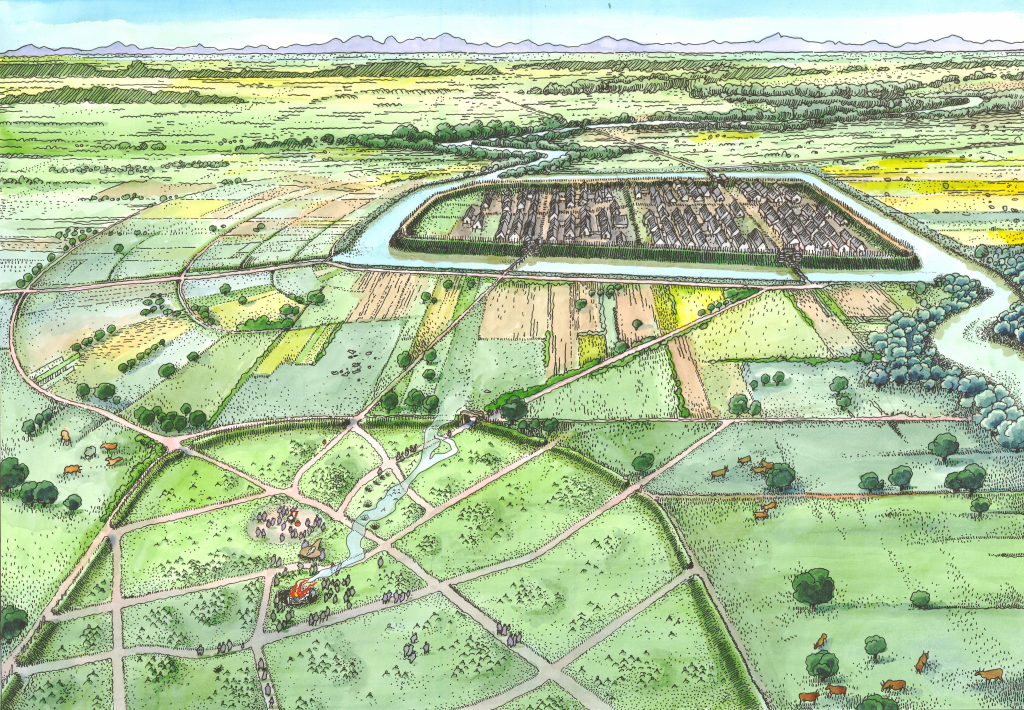
The organisation of the necropolis reflects that of the village: the burials, often in kinship groups, are arranged in blocks bordered by roads, just like the village dwellings, which probably housed extended family units.